
Resilience Standards Must Work for Households, Not Just Institutions
The updated standards for Local Resilience Forums recognise coordinated communication and community involvement. The practical test is whether people can use those arrangements across the places and responsibilities that make up everyday life.
By Is Everything Safe
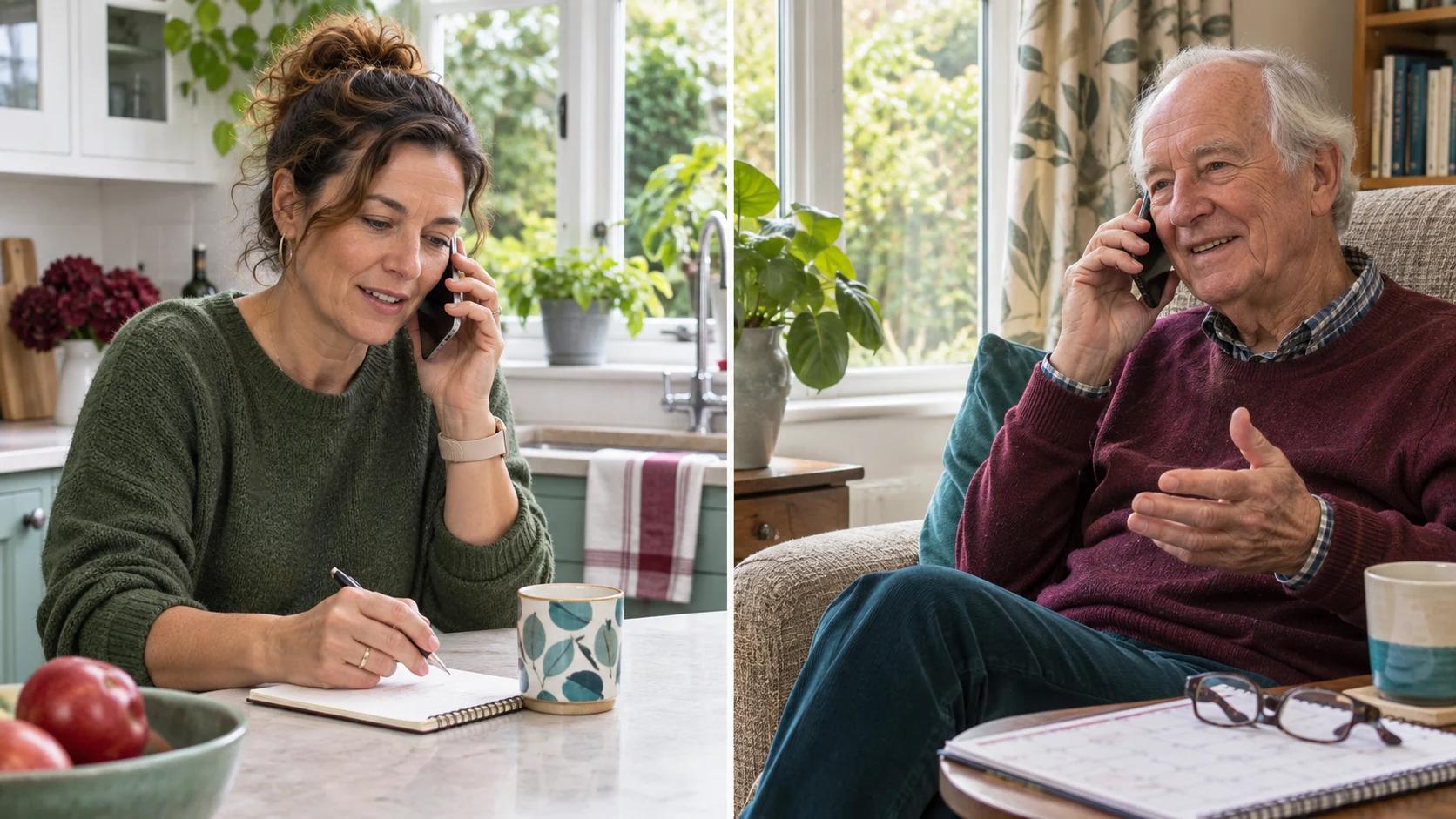
A household should not have to become its own multi-agency coordination centre.
Someone may live in one area, work in another and support a relative elsewhere. During disruption, they need to understand what is happening across those places, what it means for the people who depend on them and what they can realistically do.
That is the household experience against which we should test the updated National Resilience Standards for Local Resilience Forums.
Published by the Cabinet Office's COBR Directorate in November 2026, Version 4 sets out expectations for multi-agency arrangements. This is government guidance, distinct from the House of Lords committee report on national resilience. It is explicitly non-statutory: it does not create new legal duties or transfer individual responders' responsibilities to the forum. It separates minimum expectations from good practice. Introduction, pages 6-8
Coordinated communication is already an expectation
It would be wrong to suggest that the standards overlook proactive communication.
Standard 3 includes minimum expectations for practical preparedness messages, tested warning-and-informing procedures, alternative communication channels, accessible formats and consistency across partner organisations. It also recognises the role of trusted local voices. Standard 3, pages 24-25
The more useful question is how those arrangements are experienced by the public.
A coordinated plan between organisations does not automatically produce a coherent experience for a person trying to make a decision. If that person must find several websites, monitor different channels and work out how separate updates relate to one another, a coordination task still remains with them.
That is not evidence that every Local Resilience Forum is failing. Nor does the absence of a public alert subscription demonstrate a breach of statutory duties. It is a reason to examine the journey from published information to practical action, rather than treating publication itself as the outcome.
Household responsibilities do not stop at an administrative boundary
Consider someone managing a power interruption at home while checking whether an older relative in another area can receive their usual support. The information needed may come from different organisations, at different times, through different channels.
This is an illustrative household situation, not a measured account of every area's services. Its value is in testing the assumptions: does the person know where to look, can they distinguish current advice from an earlier update, and can they understand the implications across both locations?
Standard 3K recognises coordination with neighbouring LRFs and regional partners to align communications across wider areas. Importantly, it sits within good practice, rather than minimum expectations. Standard 3K, page 25
The provision gives us a concrete starting point for a conversation about cross-boundary experience. It does not establish a single public information service or remove the need to test how people navigate existing arrangements.
Two-way communication needs somewhere to go
The standards also recognise dialogue. Standard 6C includes frequent two-way communication between LRFs and voluntary, community and faith-sector organisations within minimum expectations. Public feedback and co-development of communications appear as good practice under Standard 3M and 3O. Standard 6, pages 34-35 and Standard 3, page 26.
These are important relationships, but consultation is not the same as an operational route for someone who cannot follow an instruction during disruption.
A message may be clear and still be impossible for a person to act upon. They may lack transport, be unable to leave someone they care for or depend on equipment affected by an outage.
Our view is that a feedback route needs an accountable recipient, realistic response expectations and a fallback. Collecting requests without the ability to handle them can create another unsafe assumption. Acknowledging a message is not confirmation that someone is safe or able to act.
The human foundations of institutional plans
Standard 5 addresses continuity assumptions, including loss of personnel, single-person dependencies and backup capacity. Standard 5D and 5H, pages 31-32
We believe those assumptions should be tested against household realities. The colleague expected to restore an essential service may be affected at home by the same event. Their backup may be in the same position.
This is our extension of the standard, not an explicit requirement for employers to inspect household preparedness. Support should not depend on employees disclosing private family records, nor should institutional responsibilities be transferred to them.
Five connected layers, not five separate responsibilities
Our five-tier interpretation places individual preparedness and household resilience beneath community, local and regional, and national resilience. It is an explanatory model, not an official framework or a measure of compliance.
The relationships run in both directions. Prepared households can support communities and services, but households also need dependable infrastructure, accessible information and practical support. Community relationships can help people prepare from the outset; they are not simply a later stage reached once enough individuals are ready.
No amount of personal organisation can replace functioning essential services. Equally, institutional plans become fragile when they assume that people can act without understanding their circumstances.
Make preparedness ordinary, and test whether it helps
Preparedness need not mean organising everyday life around catastrophe. It can mean making time to discuss responsibilities, agree how people will help one another and revisit arrangements when circumstances change.
That should make life more manageable, not create another administrative burden. A completed checklist or an installed app is not proof of preparedness. The useful test is whether arrangements are understood, maintained and usable when needed.
We would like to see household journeys tested alongside institutional exercises:
- Can someone understand relevant advice across the places they care about?
- Can another person use the arrangements if the usual organiser is unavailable?
- What remains usable when a phone, internet connection or normal communication channel fails?
- Can people explain that they cannot act, and is it clear who can respond?
- Do lessons from those experiences change the next version of the plan?
The standards provide a framework for better coordination. The next step is to demonstrate that coordination in people's lives: less effort spent piecing information together, clearer expectations and more realistic support for practical action.
Source and scope
This article draws on the Cabinet Office's National Resilience Standards for Local Resilience Forums, Version 4, November 2026, particularly the introduction and Standards 3, 5 and 6. Reviewed 27 November 2026. Statements about household journeys and our five-tier model are our interpretation, not government endorsement or an assessment of any individual LRF's compliance.
Read the standards and the wider perspective
Explore the original government guidance alongside our interpretation of the five connected layers of resilience.


